2026-10-23 ·
What Influences Mold Testing Costs in La Jolla
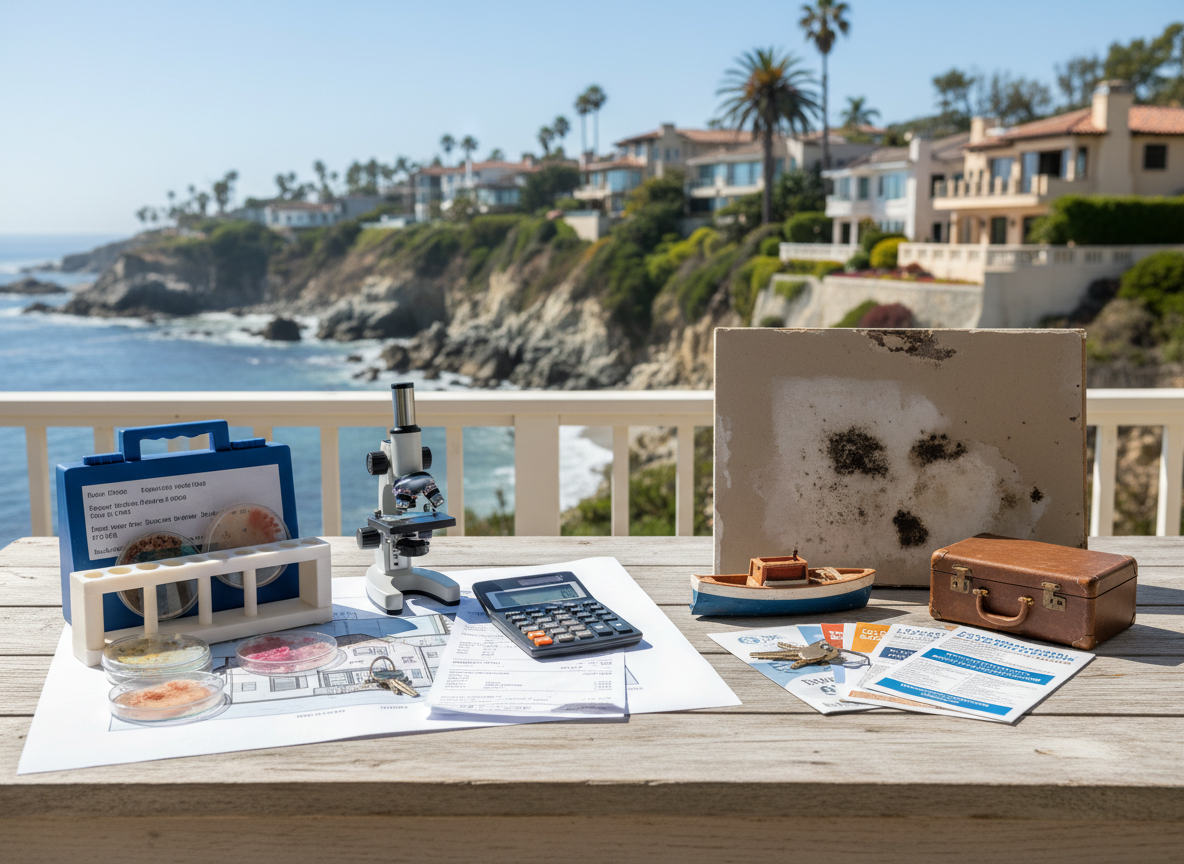
Mold testing costs in La Jolla generally range from $350 to $950 for most residential properties, driven by the number of samples collected, the home's square footage, and accessibility challenges created by the area's coastal terrain and older construction.
Home Size and Construction Details
Larger homes in neighborhoods such as Muirlands or Upper La Jolla require more air samples and surface swabs because moisture can migrate through multiple levels and wall cavities. Properties built before 1970 often feature plaster walls and crawl spaces that trap humidity from the Pacific, raising the number of test locations needed. A 2,500-square-foot single-story residence near La Jolla Shores Beach may need only four samples, while a 4,000-square-foot two-story home on Mount Soledad can require eight to ten samples plus moisture mapping. Technicians must also account for attached garages and additions common in Windansea, each adding time and lab fees. These variables directly scale the final invoice without changing the base per-sample rate.
Testing Methods and Sample Volume
Standard spore-trap sampling costs less than culturable or ERMI panel testing because the lab work is simpler. Homes near Scripps Pier or Torrey Pines experience consistent marine layer fog that promotes hidden growth behind tile or under subfloors, prompting inspectors to add wall-cavity or dust samples. When visible discoloration appears in bathrooms or attics, targeted tape-lift samples keep costs lower than whole-house air testing. Mold testing protocols that include both indoor and outdoor controls add roughly $75 per comparison sample. Post-remediation clearance testing follows the same pricing structure but often requires fewer locations once the source is removed.
Neighborhood Terrain and Access Factors
Steep driveways and hillside lots in Bird Rock or La Jolla Heights limit equipment transport, adding labor time that appears on the invoice. Properties set back from the street near UC San Diego or La Jolla Village may need extra scheduling to coordinate with gated entries. Salt air accelerates corrosion on HVAC components, so inspectors frequently include supply and return duct samples in these zones. Homes on flatter blocks in La Jolla Shores allow faster movement between rooms, keeping total hours closer to the lower end of the range. These access realities are consistent across San Diego's coastal corridor and affect every job performed from the 7345 La Jolla Blvd base.
Seasonal Moisture Patterns
Although La Jolla maintains a mild Mediterranean climate, winter marine layers and occasional heavy rains increase indoor humidity between December and March. During these months, inspectors see more requests for whole-house testing because condensation forms on single-pane windows and uninsulated slab edges common in older stock. Summer fog still penetrates crawl spaces in Lower Hermosa and Soledad South, sustaining growth even when outdoor temperatures stay moderate. Scheduling testing after a plumbing leak or roof repair, as outlined in related guidance on drying procedures, prevents unnecessary repeat visits and keeps costs predictable.
Choosing the Right Scope to Control Expenses
Homeowners can limit costs by providing prior inspection reports or photos of suspected areas before the technician arrives. Focusing on high-risk zones such as bathrooms and attics rather than blanket sampling often reduces the total by $150 to $300. Inspecting Older La Jolla Homes for Hidden Moisture Problems explains how to identify these zones in advance. When results indicate remediation is needed, follow-up clearance testing uses the same pricing model, ensuring the process stays transparent from initial call through final verification.