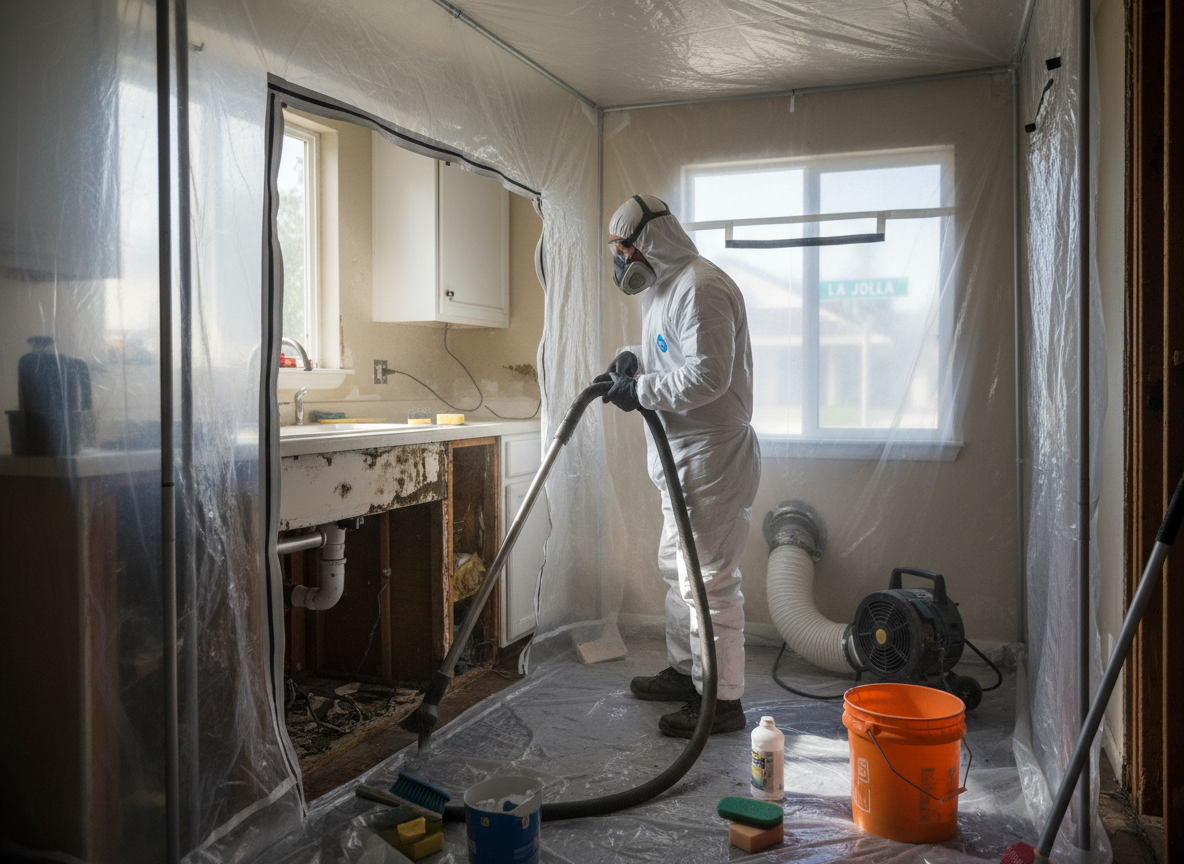
La Jolla homes built before the 1980s often sit on raised foundations or have crawl spaces that trap moisture from the mild Mediterranean climate. Morning fog rolls in from La Jolla Cove and Scripps Pier, keeping relative humidity elevated even when daytime temperatures stay moderate. This combination allows hidden mold to develop behind plaster walls in Muirlands and Upper La Jolla properties long before residents notice musty odors or ceiling stains. Technicians familiar with these houses know to check HVAC returns and attic insulation first, because standard visual inspections miss growth that has already crossed into living spaces.
Windansea and La Jolla Shores Beach neighborhoods sit close to the water table, so winter rains and occasional coastal storms push groundwater against foundations. Concrete slab homes in La Jolla Village and Torrey Pines frequently develop mold at the base of exterior walls where irrigation overspray meets poor drainage. Remediation here requires removing baseboards, drying the slab edge, and sometimes replacing sections of drywall that have wicked moisture upward. Crews also watch for mold on the back side of cabinets in kitchens that back up to hillside slopes, a common detail in homes near Mount Soledad.
Because La Jolla borders both San Diego and Del Mar, many properties fall under mixed building codes that affect how far containment must extend. Older stucco exteriors in Bird Rock can hide leaks at window frames for years, letting mold travel along wood framing into adjacent rooms. Proper work means isolating the affected zone, HEPA scrubbing the air, and confirming clearance with post-remediation sampling before any reconstruction begins. Homeowners who attempt DIY removal in these tight coastal lots often spread spores into unaffected areas through shared attic spaces or HVAC ductwork.
Technician insight
In La Jolla the thing that catches most people out with mold cleanup near me is the way coastal fog keeps crawl spaces under 1960s and 1970s homes damp year-round. Homeowners in La Jolla Shores and Bird Rock often seal the vents thinking it will stop moisture, but that traps humidity against the soil and lets mold travel up through floor joists into living areas.
Hidden Growth Behind Kitchen Cabinets
A homeowner in Bird Rock noticed a musty smell after winter rains but no visible water. Inspection found elevated moisture at the slab edge where irrigation had pooled against the foundation. We removed the lower cabinets, treated the concrete, and dried the subfloor before reinstalling new base cabinets.
How it works
- 1
Initial Assessment
Technician inspects affected rooms, checks crawl spaces and attics, and identifies moisture sources tied to La Jolla coastal conditions.
- 2
Containment Setup
Plastic barriers and negative air machines isolate the work zone to prevent spore migration into unaffected living areas.
- 3
Removal and Cleaning
Contaminated materials are removed, surfaces are treated, and HVAC components are cleaned if mold has entered ducts.
- 4
Drying and Verification
Dehumidifiers and air movers dry the structure, followed by moisture readings and clearance testing before barriers come down.
Pricing
Cost depends on square footage affected, whether crawl spaces or attics are involved, and how many rooms require containment.