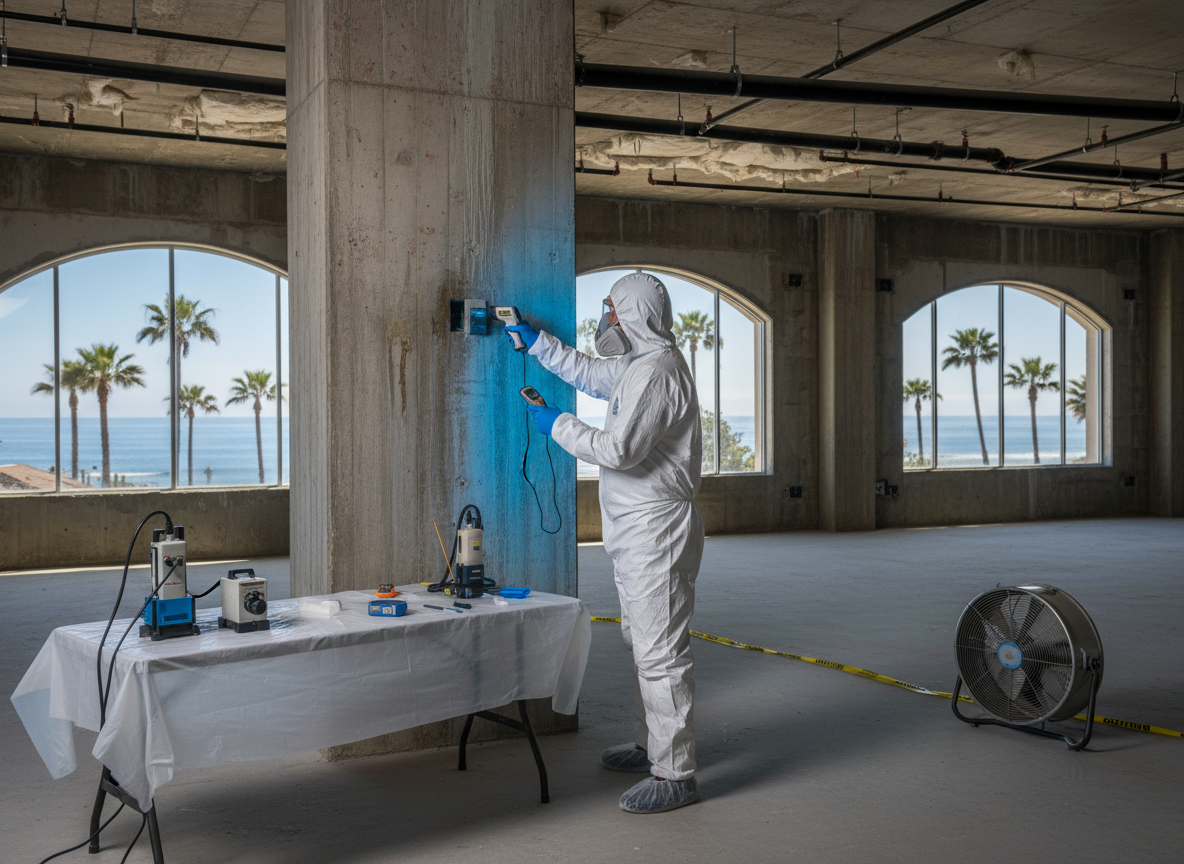
La Jolla commercial properties near UC San Diego and Scripps Pier often feature older HVAC systems and flat-roof construction that trap condensation from the mild Mediterranean climate. Inspectors must check above suspended ceilings, inside rooftop units, and along exterior walls facing the ocean where salt air accelerates moisture retention in drywall and insulation. Buildings in La Jolla Shores and Bird Rock frequently show hidden growth after minor leaks because the consistent coastal humidity prevents full drying. Commercial inspections here require air sampling in multiple zones plus moisture mapping with infrared tools to catch issues before they affect tenant spaces.
Edge cases in Upper La Jolla and Windansea include mold in underground parking garages and elevator shafts where poor ventilation meets groundwater seepage from Mount Soledad slopes. Inspectors also evaluate loading docks and kitchen exhausts in La Jolla Village restaurants because grease buildup combines with ocean fog to create persistent damp pockets. San Diego County commercial codes require documentation of any visible growth over ten square feet before remediation begins, and reports must note whether the structure sits within flood zones near La Jolla Cove. Skipping these checks leaves owners exposed to repeated callbacks when summer marine layers raise indoor humidity again.
Torrey Pines and Del Mar border properties often involve mixed-use buildings where retail ground floors connect to office levels above, allowing mold to travel through shared ductwork. A full commercial inspection documents every accessible cavity, tests for mycotoxins when requested, and flags any porous materials that cannot be salvaged. Local operators know that La Jolla's rare but intense winter rains can overwhelm aging drainage around Birch Aquarium area structures, pushing water into slab foundations and creating slab-edge mold that standard visual checks miss.
Technician insight
In LA JOLLA, the thing that catches most people out with Commercial mold inspection is the way ocean fog keeps humidity high inside older commercial HVAC systems along La Jolla Blvd and near Scripps Pier, so growth hides in ducts long after any visible leak dries up.
La Jolla Village Office Building
A two-story office near La Jolla Village showed tenant complaints of musty air after winter rains. Inspection found elevated spores in the rooftop unit serving the second floor where condensate lines had clogged. We isolated the unit, collected samples from supply registers, and provided a report that allowed targeted cleaning without full building shutdown.
How it works
- 1
Site Walkthrough
Technician tours all accessible commercial spaces including mechanical rooms, restrooms, and tenant suites while noting water stains and musty odors.
- 2
Moisture and Humidity Mapping
Infrared camera and pin meters check walls, ceilings, and HVAC components for hidden dampness caused by La Jolla's coastal fog.
- 3
Air and Surface Sampling
Spore traps and tape lifts are collected from multiple zones and sent to a lab for species identification.
- 4
Detailed Reporting
Findings include photos, lab results, and specific recommendations for remediation or further testing in San Diego County commercial buildings.
Pricing
Cost depends on square footage, number of samples, and building complexity; most La Jolla commercial inspections start with an on-site assessment.